

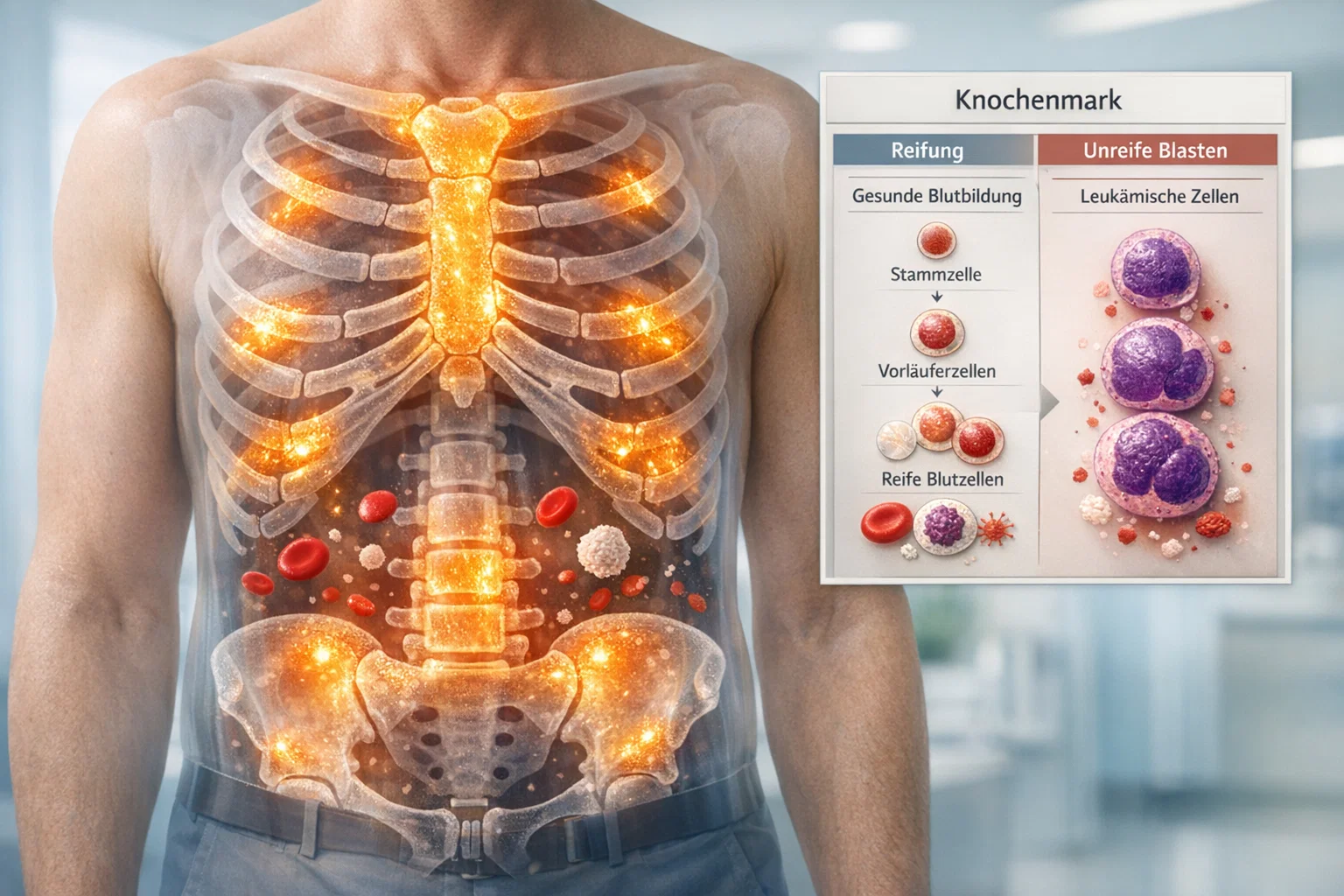
In conventional medicine, leukemia is considered a disease of the blood or, more precisely, of the bone marrow, where our blood cells are formed. At this level, it is a disorder of the hematopoietic stem cells, which normally give rise to red blood cells, platelets, and various types of immune cells. In leukemia, this process gets out of control. Immature, misdirected cells multiply, displace healthy blood formation, and thus undermine the body’s ability to transport oxygen, fight infections, and stop bleeding.
What is often overlooked is that this derailment does not arise out of nowhere. Stem cells are not autonomous units that function independently of the rest of the body. They continuously react to the internal environment in which they live. This environment consists of hormones, nutrients, inflammatory messengers, stress hormones, immune activity, metabolic products, signals from the nervous system, and from the gut. Each of these levels influences which genes are active in a cell, how it divides, how it matures, and whether it withdraws at the right moment.
Leukemia therefore arises not only from a mutation, but from a long-term shift in this internal environment in a direction in which control, differentiation, and self-regulation no longer function reliably.
The bone marrow as a mirror of the internal environment
The bone marrow is one of the most active tissues in the human body. Every day, billions of new blood cells are formed there, which are needed for oxygen transport, immune defense, and wound healing. For this process to work, the internal environment must be very stable. Even small disturbances have a faster effect here than in many other organs.
Inflammation, nutrient deficiencies, environmental toxins, or hormonal shifts easily disrupt this balance. Because new cells are constantly being formed in the bone marrow, these cells are particularly sensitive to such stresses.
For a stem cell to become a healthy immune cell or a red blood cell, the body needs clear control signals, sufficient energy in the cells, enough oxygen, as well as vitamins and trace elements. Equally important is an internal environment that is as little inflamed as possible. Only under these conditions can blood formation proceed calmly, orderly, and reliably.
If this interaction gets out of balance, some cells lose their normal development path. They remain immature, continue to divide, and no longer fulfill their actual task. This derailment of cell maturation is precisely the basic biological pattern of leukemia.
Chronic inflammation as a permanent pacemaker
A particularly important factor in this process is a form of inflammation that is hardly noticed. It causes no pain, no fever, and no visible symptoms, but can be active in the background for many years. This so-called chronic, low-grade inflammation often arises from a combination of heavily processed food, an unbalanced gut microbiome, environmental toxins, constant stress, lack of sleep, viral loads, and unstable blood sugar. All these factors keep the immune system in a permanent state of alert, even when there is no acute infection.
In this process, the body constantly releases small amounts of inflammatory messengers. These messengers and aggressive oxygen compounds that are produced also reach the bone marrow, exactly where new blood cells are formed. They act there like a permanent jammer. The stem cells, from which healthy immune cells should arise, receive contradictory signals. Instead of developing calmly and orderly, they are repeatedly forced into a state of stress and survival mode.
Under these conditions, the internal circuits of the cells also change. Which genes are active and which remain silent depends heavily on the internal environment. In an inflammatory environment, programs that are geared towards rapid division and survival are more likely to be switched on, while those responsible for maturation, specialization, and controlled cell death take a back seat. As a result, cells remain in an immature state, continue to divide, and no longer properly fulfill their actual task.
Over a longer period of time, a biological breeding ground is created on which misdirected cell groups can exist in the first place. Leukemia does not arise out of nowhere. It develops in an internal environment that has lost order, maturation, and regulation and instead sends stress, inflammation, and chaotic signals to the cells.
Energy crisis in the cells when blood formation loses its internal power
The formation of new blood cells is one of the most energy-intensive processes in the human body. Every day, billions of new cells are formed in the bone marrow, which must divide, mature, and become highly specialized immune cells or red blood cells. For all this, the body needs large amounts of energy, and this energy is generated in tiny structures within each cell, the so-called mitochondria. You can imagine them as small power plants that produce the fuel from nutrients and oxygen that every cell needs for its work.
If these power plants do not function properly, the entire process of blood formation gets out of sync. This does not happen suddenly, but slowly and gradually. Environmental toxins, chronic inflammation, constant stress, and nutrient deficiencies lead to the increased formation of so-called free radicals in the cells. These aggressive molecules attack sensitive structures, including the membranes and the genetic material of the mitochondria. At the same time, many bodies lack exactly those vitamins and trace elements that would be necessary for repair and protection, such as B vitamins, magnesium, zinc, copper, iron in the right balance, and certain fatty acids such as omega three.
The result is a kind of energy shortage at the cellular level. The cells can still survive, but they lose the ability to perform their tasks cleanly and orderly. Divisions become less accurate, repair mechanisms no longer work reliably, and errors in the genetic material are no longer sufficiently corrected. Especially in the bone marrow, where cells divide particularly quickly, this has far-reaching consequences.
In leukemia cells, you find exactly such patterns very often. Their internal metabolism is altered, they gain energy in other, less stable ways, they react strongly to inflammatory signals, and are particularly dependent on sugar as a quick source of energy. This fits with an environment in which healthy mitochondrial function has been lost and cells switch to a biological emergency mode. In this state, mainly those cells survive that can continue to divide, even if they have long lost their original task.
Viruses, immune system, and epigenetic shifts
Many forms of leukemia are related to long-lasting viral loads in the body. These include viruses such as the Epstein Barr virus, the cytomegalovirus, or various herpes viruses, which often do not completely disappear after an infection, but permanently settle in the tissue and in certain cells. Retroviruses can also act in a similar way. These pathogens do not always directly attack cells, but they change the biological environment in which these cells live and develop.
Some of these viruses can penetrate into those stem cells from which blood cells later arise. Others act via inflammatory signals and via changes in the way genes are read in these cells. You can imagine it as if the internal instructions of the cells are not destroyed, but their use is shifted. Programs for defense and maturation are shut down, while programs for survival and division are activated more strongly.
At the same time, the immune system is chronically busy due to the permanent confrontation with these viruses. It works constantly in the background to keep the pathogens in check. Such an immune system is tired, even if it still functions externally. In this state, the ability to recognize and eliminate degenerate or malformed cells early on decreases before they can multiply.
The bone marrow is also under this influence. Inflammatory signals, which arise from the permanent viral activation, change the environment in which new blood cells mature. Maturation processes are slowed down, while division impulses increase. This creates a biological climate in which immature, misdirected cells can survive and spread more easily, a soil on which leukemia can develop in the first place.
The gut as an immunological conductor
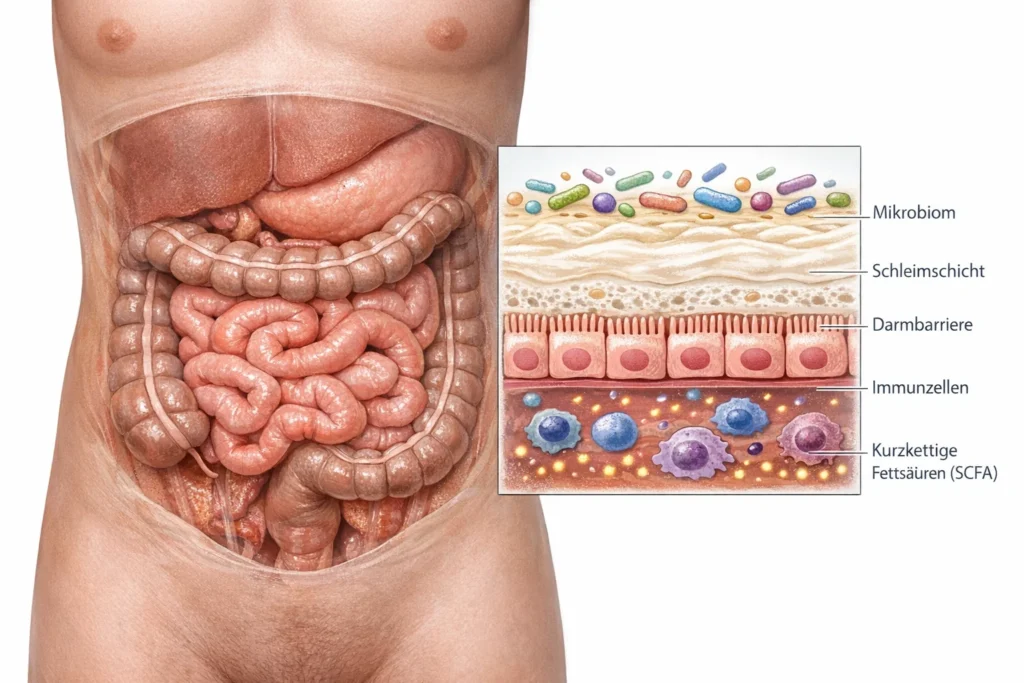
The gut is not just a digestive organ. It is one of the most important control centers of the immune system. The microbiome lives in it, i.e. the community of trillions of bacteria that constantly communicate with the intestinal mucosa, the nervous system, and the immune cells. You can imagine this system as a large orchestra. The individual types of bacteria are the instruments, the intestinal mucosa is the stage, and the immune system listens permanently and adjusts its reactions accordingly. The gut sets the pace.
These gut bacteria produce a variety of substances, for example short-chain fatty acids, which are formed from fiber. These substances have an anti-inflammatory effect, nourish the intestinal mucosa, and send signals to the immune system that everything is in order. As long as this interaction is stable, the immune defense remains balanced. It reacts to real dangers without attacking its own body or remaining permanently on alert.
However, if this balance gets out of sync, the tone of the orchestra changes. If protective bacteria disappear and pro-inflammatory germs predominate, the intestinal mucosa becomes more permeable. It loses its ability to clearly separate the intestinal contents from the blood. As a result, bacterial components, so-called endotoxins, can get from the gut into the bloodstream.
For the immune system, these substances look like a permanent attack. It is constantly activated, even if there is no acute infection. This permanent irritation acts like an endless alarm signal. The immune system remains in combat mode without ever coming to rest.
These signals also reach the bone marrow, the place where new blood cells are formed. If inflammatory messengers constantly arrive there, the biological environment of blood formation changes. Maturation and order are slowed down, while rapid division and survival come to the fore. Exactly this shift is one of the central prerequisites for misdirected, immature cells to multiply, i.e. the breeding ground on which leukemia can arise.
Epigenetics as a bridge between environment and cell
At this point, it becomes clear why leukemia in most cases is not a pure coincidence and also not a fixed genetic fate. The genes that we carry within us are more like a blueprint or a sheet of music. Whether a quiet piece or a chaotic noise arises from it depends on how this plan is read. This is exactly what epigenetics describes.
Our cells constantly decide which genes are active and which remain silent. These decisions are not made arbitrarily, but react to the internal environment of the body. Nutrition, sleep, stress, inflammation, infections, environmental toxins, and emotional stresses send uninterrupted signals to every single cell. These signals tell the cell, so to speak, in which world it lives. In a safe, nutrient-rich, quiet environment, it can develop, repair, and mature. In a stressed, inflammatory, low-energy environment, it switches to a survival mode.
In this survival mode, the focus is no longer on order, specialization, and long-term stability, but on rapid multiplication and perseverance. Cells continue to divide, even if they should actually mature. They remain stuck in an immature state because the internal environment signals to them that there is no time for development, but for pure survival.
Exactly this pattern is found in leukemia. The affected blood cells no longer follow the normal development path, but remain stuck in a state that is characterized by constant division, lack of maturation, and lack of function. Epigenetics explains why this behavior does not simply arise out of nowhere, but from a biological environment that has pushed the cells in exactly this direction over a long period of time.
How the body can get back in order without trivializing the disease
If you understand leukemia as a disorder of blood formation, then it also becomes clear why a holistic accompaniment starts at a different point than acute medicine. Acute medicine primarily tries to push back the out-of-control cells so far that space is created again in the bone marrow. Space for healthy blood cells, for order, for a minimum of functioning structure.
A holistic accompaniment starts deeper. It asks in what internal state this bone marrow is at all. Because even if the diseased cells are temporarily reduced, the biological environment in which they arose often remains. A body that is permanently trapped in inflammation, nutrient deficiency, lack of sleep, intestinal disorders, and internal stress hardly has the strength to stably perform such a complex task as the new formation of healthy blood cells.
Blood formation is no small matter. It is one of the most complex processes in the whole body. It requires energy, rest, nutrients, a functioning immune system, and an environment that allows development. In an internal state that is constantly switched to alarm, deficiency, and survival, there is no room for it.
To work holistically in this context means to change this internal environment. It is about giving the body back conditions under which it not only fights, but can also repair, order, and rebuild. This is not an esoteric thought, but a biological one.
And it also means being honest. Some phases are not gentle. In some moments, it is first about stabilizing people, getting them through a critical phase, keeping them alive. Only when there is some security in the system again can regeneration, construction, and long-term order begin. Exactly in this sequence lies the actual logic of healing.
Why the acute phase is first about support and not about perfection
In an acute phase of leukemia, the body is in a state of deep biological instability. Blood values fluctuate, the risk of infection is increased, mucous membranes react sensitively, appetite decreases, and exhaustion, nausea, pain, sleep disorders, and inner tension often overlap at the same time. The entire system is busy keeping itself upright at all.
Under these conditions, the organism does not work towards optimization, but towards survival. It tries to limit further damage and preserve as much function as possible. Exactly for this reason, holistic accompaniment at this point does not start with ideals or long-term concepts, but with the very concrete question of what this body can absorb, digest, and hold in this moment without being additionally overwhelmed.
Especially here, nutrition is often misunderstood. It is not a question of “clean” or “right”, but a form of biological supply. It decides whether the body even has the prerequisites to form new blood cells, regenerate immune cells, repair mucous membranes, and metabolize and excrete drugs again. In this phase, it is less about discipline than about load-bearing capacity.
Nutrition as the basis for blood, not as a theoretical concept
Blood is formed from what is really available to the body. For new red blood cells, immune cells, and platelets to be formed in the bone marrow every day, it continuously needs energy, protein, minerals, vitamins, and trace elements. In leukemia, this process is disturbed because normal blood formation is displaced, while at the same time inflammation, healing, drug degradation, and tissue repair demand enormous additional resources. The body is thus in a field of tension in which it needs more than usual and at the same time has less leeway.
In this situation, it is above all about avoiding deficiency without further overburdening the system. This is exactly what the nutritional medicine guidelines in oncology also point out, which for years have emphasized how crucial it is to recognize and actively correct a threatening or existing malnutrition early on, because it decides how well someone tolerates therapies, how high the risk of infection is, and how much regeneration remains possible at all.
One aspect is often underestimated, especially in holistic circles. Many people with a cancer diagnosis unintentionally enter a state of restriction. They eat less because they are afraid of doing something wrong, or because they adhere to programs that sound relieving but simultaneously deplete the body. However, bone marrow that is supposed to form new blood cannot work if it lacks the building blocks, regardless of whether someone lives plant-based or not.
In practice, this often means that food may become more functional for a while. Warm, soft, nutrient-rich, easily digestible, sufficiently high in protein, and composed in such a way that blood sugar remains as stable as possible, because strong fluctuations additionally stress the body and intensify inflammatory processes. In some phases, smoothies, soups, purees, porridges, or even high-calorie supplements are not an inferior emergency solution, but simply what the body can hold and utilize at that moment.
A plant-based diet is also possible in this context, even under therapy. However, it then requires special attention to ensure that protein, vitamin B12, iron, zinc, iodine, vitamin D, omega 3 fatty acids, and calcium do not become silent bottlenecks. This is not an argument against plant-based nutrition, but for a conscious supply. Blood does not arise from convictions, but from what is actually available to the body.
The gut as part of cancer therapy, more than just a side issue
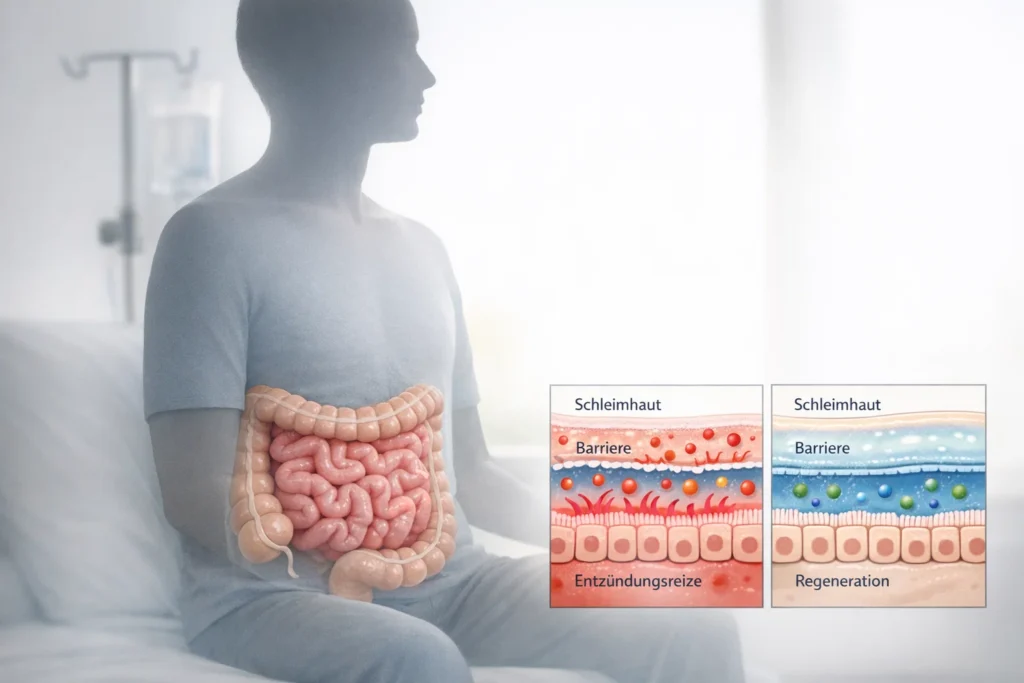
In diseases of the blood, the gut often only comes into focus when problems already occur. Yet, it is one of the most important immunological organs of the body. The microbiome, i.e., the entirety of the intestinal bacteria, influences how strong inflammations occur in the body, how stable the intestinal mucosa remains, how balanced the immune system reacts, and also how the organism tolerates therapies. This is particularly important in leukemia because susceptibility to infection, mucosal damage, and the use of antibiotics are often among the greatest burdens.
This touches on a point that initially sounds unfamiliar to many. For a long time, so-called neutropenic diets were considered standard, i.e., extremely low-germ, highly restricted forms of nutrition. However, the scientific evaluation of these concepts shows no clear advantage in terms of infection rates or survival. Professional societies and guidelines now emphasize above all hygiene, careful food preparation, and avoiding clearly risky products, because strict restrictions reduce the quality of life and often further impoverish the diet.
From a holistic perspective, it is therefore about a finely balanced equilibrium. The gut needs nutrients, diversity, and substance, while at the same time it needs protection in phases of increased vulnerability. In practice, this often means preferring well-cooked, freshly prepared, simple dishes, avoiding particularly risky raw foods in high-risk phases, and working in parallel to stabilize the mucosal barrier so that the body is not constantly under pressure from pro-inflammatory substances from the gut.
Calming inflammation means giving the body room to regenerate again
When a body tries to move from a leukemic derailment back into a functioning blood formation, inflammation plays a central role. This is usually not about acute, noticeable inflammations, but about a quiet, chronic inflammatory readiness that runs in the background and binds energy for years, keeps the immune system on alert, and shifts the metabolism into a state in which repair and healthy cell renewal become increasingly difficult. As long as this inner alarm does not subside, the bone marrow works against an environment that makes any stabilization difficult for it.
In this context, it is not enough to just reduce burdens somewhat. The inner milieu decides which programs run in the cells, whether the switch is made to survival and stress or whether growth, maturation, and order get a chance again. Ultra-processed fats, industrial sugar, alcohol, artificial additives, and products with a strong effect on blood sugar create a biochemical environment that promotes inflammation, intestinal disorders, and insulin problems. A healthy body can compensate for such stimuli for a while. An organism that has already fallen deeply out of balance loses this ability.
An inflammation-regulating diet therefore means taking away from the system those constant stimuli that hold it in a constant defensive mode. This creates space for real nutrients, calmer blood sugar levels, a more balanced immune system, and a gut flora that has a stabilizing effect again. In this changed inner climate, the body can begin to rebuild blood formation, mucous membranes, and the fine-tuning of the immune system, step by step, supported by biological relief instead of constant resistance.
Micronutrients as bottlenecks, not as miracle cures
For bone marrow, immune system, and blood formation to function, the body needs certain vitamins, minerals, and fatty acids. These substances are not extras, but basic building blocks for cell division, oxygen transport, DNA repair, immune reactions, and energy production. These include vitamin B12, folate, vitamin B6, iron in a healthy balance, zinc, copper, vitamin A, vitamin D, vitamin C, selenium, magnesium, and omega 3 fatty acids.
This does not mean that all these substances should be supplemented across the board in high doses. It means that the body cannot work without them. If even one of these building blocks is missing or not properly available, blood formation becomes slower, more prone to errors, and more unstable. Leukemia does not arise from a single deficiency, but a body that lives with such bottlenecks for a longer period of time loses biological reserve, exactly where it needs it most urgently.
Therefore, a solid nutrient diagnostics is a central component of any meaningful support. You have to know where the body stands before you intervene. Many important nutrients cannot be reliably measured in a simple serum because they only fluctuate there in the short term. For some substances, whole blood is more meaningful because it shows what has actually arrived in the cells. This applies, for example, to magnesium, zinc, or also to certain B vitamins. Iron should always be considered in a differentiated way, with ferritin, transferrin saturation, and inflammation values, so that deficiency and overload can be distinguished. Vitamin D is determined in the serum, omega 3 fatty acids are best determined in the membrane of the red blood cells, and if there is suspicion of burdens or losses, urine analyses can also provide clues.
Only when it is clear where real deficits exist does supplementation make sense. The goal is not to flood the body with pills, but to specifically close those bottlenecks that block blood formation, immune function, and regeneration.
Micronutrients are not a cancer cure. They are the foundation on which the body is even able to react, repair, and stabilize itself. Without them, no therapy, whether medical or holistic, can really take hold.
And there is another important point that is often overlooked. Many people start taking very many dietary supplements simultaneously in the course of a cancer, often in high doses and often without knowing whether they even need these substances. This usually happens out of the understandable desire to want to do something actively. For the body, however, it means additional work, because the liver, intestines, and kidneys have to process all this, while they are already heavily burdened anyway.
Holistic support therefore does not mean adding more and more, but looking more closely. What is really missing, i.e., where is something deficient or what is perhaps even in excess, and what helps the system to come back into balance instead of further overburdening it.
Movement and muscle mass as the silent power of the immune system
In cancer treatment, movement was long considered something additional, something that you do when there is still energy left. Today, we know much more about how strongly even gentle physical activity affects the entire organism, even and especially during a serious illness. Movement not only affects mood, but also metabolism, blood circulation, hormone levels, the tendency to inflammation, and the body’s ability to recover from stress. Therefore, medical guidelines now expressly recommend movement even during cancer therapy, always adapted to the respective condition.
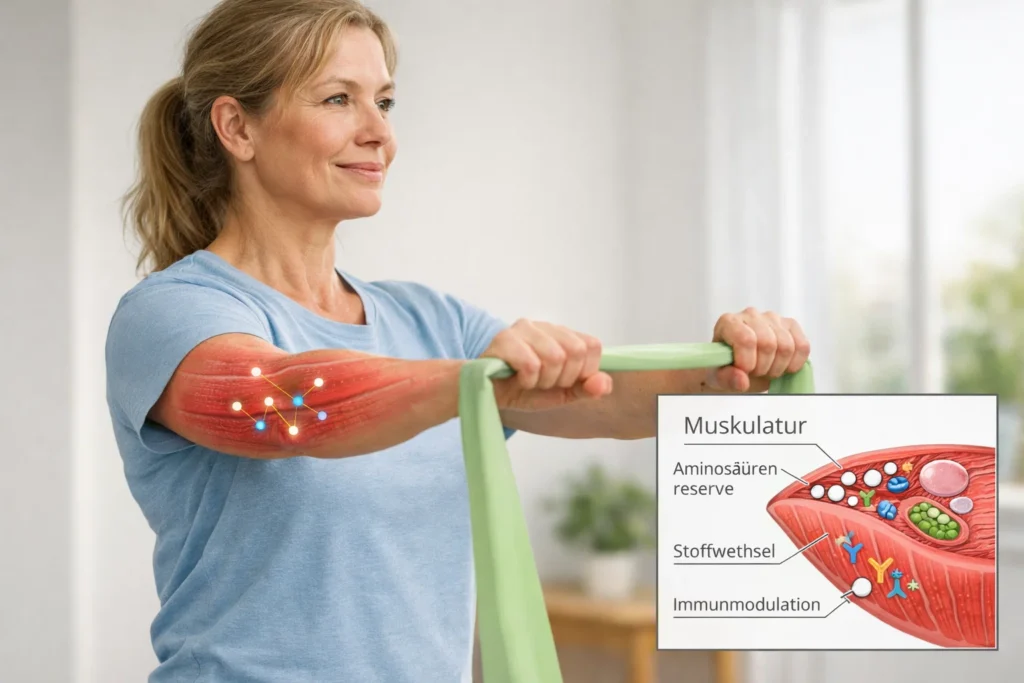
In leukemia, this is particularly sensitive because there are phases in which blood values are low, infection risks exist, or exhaustion is overwhelming. Nevertheless, the body remains a biological system that reacts to stimuli. And one of the most important of these stimuli is muscle activity. Muscles are not simply tissue with which you move. They are an active metabolic organ. Amino acids are stored in them, which are needed for the repair of tissue. They help to intercept blood sugar so that it does not constantly stress the nerves and the immune system. They send out inflammation-dampening signals and influence how the body deals with stress.
When a person loses muscle mass in a serious illness, he loses more than strength. He loses a part of his biological reserve. The body becomes exhausted more quickly, reacts more sensitively to therapies, and has less room to rebuild itself. Load-bearing capacity is a very fitting term here, because it describes exactly what muscles give the body, the ability to withstand stress without collapsing immediately.
Holistically considered, movement in this situation often means something completely different than sport. It can mean getting up several times a day for a few minutes, walking slowly through the room, deepening the breathing, or moving the joints carefully. It is not about performance and not about training in the classical sense, but about the feedback to the body that it is still involved, that blood circulation is flowing, that signals from the muscles go into the immune system. These small impulses have a deep effect, even if they look inconspicuous from the outside. They help to break through the inner cycle of stagnation, inflammation, and exhaustion and thus create a basis on which the body can react again at all.
Sleep and inner rhythm as a silent therapy axis
Sleep is far more than rest in cancer. In these hours, cells are repaired, inflammations are regulated, hormones are reset, and the immune system is sorted. The brain clears up metabolic residues, the nervous system comes out of the alarm mode, and the body gets the chance to find its way back into a state in which healing is possible. This is crucial especially in leukemia because blood formation, immune regeneration, and detoxification depend heavily on these nocturnal repair phases being able to take place.
In reality, however, sleep is often massively disturbed in this disease. Anxiety, inner restlessness, pain, medications, shifted cortisol levels, clinic procedures with light at night, noises, and interruptions tear apart the natural rhythm. The body loses not only sleep, but orientation. And this temporal order is a central control system of the organism. Cells do not work the same at every time of day. Hormones, immune reactions, digestion, inflammation, and cell division follow an inner daily rhythm that is oriented to light, darkness, and activity.
This is where chronobiology comes into play, i.e., the knowledge of how strongly our body is shaped by time and rhythm. Sleep at the right time has a different effect than sleep at the wrong time. Those who see light during the day, move a little, and have real darkness at night give their nervous system the signals it needs to form melatonin, lower cortisol, and get into the deep sleep phases in which repair takes place. If this rhythm falls apart over weeks and months, the body remains in a kind of permanent intermediate state, not really awake, not really regenerating.
Holistically, this means not considering sleep as a question of willpower, but as something that must be structurally supported. Daylight in the morning, as much natural brightness as possible, small movement impulses, less stimuli in the evening, less screen light, more rest, as similar bedtimes as possible, even if sleep is still fragile. Sometimes these measures are not enough because the body has become too unbalanced by illness and therapy. Then it needs additional support, medically or naturopathically, always with a view to interactions.
But even in difficult phases, it is worth looking at rhythm. It is one of the deepest ordering systems in the body. When it slowly becomes more stable again, this has effects on inflammation, immune reaction, hormone levels, and the ability to rebuild at all. In this sense, sleep is not a break from the healing process, but one of its most important venues.
Stress axes, nervous system, and the topic of safety
There is a form of stress that does not arise from someone brooding too much, but from the body losing its inner security. Leukemia is an existential situation for the organism. The blood, i.e., the system that carries oxygen, defense, and life itself, is affected. For the nervous system, this means alarm. And this alarm runs regardless of whether someone is rationally calm or not. The body senses threat and switches to survival.
Many people react to this by trying to regain control through control. They read, plan, optimize their diet, collect supplements, create protocols. This is not a mistake, but a natural attempt to regain a foothold in an uncertain situation. But the nervous system knows a different language than lists and plans. It reacts to safety or its absence.
Holistic support starts exactly here. Not in the sense of psyche versus body, but nervous system as part of the body. When a person feels safer internally, his biology changes. Digestion becomes more active, sleep can become deeper, inflammatory processes shut down, pain processing changes, and the immune system is more likely to find its way back into a regulated balance. A body that is not constantly in a state of alarm has more capacity for repair and regeneration.
Safety can also be generated very concretely via the body. A simple example is breathing. Long, calm exhalation signals to the nervous system that there is no immediate danger. For example, if you inhale for four seconds, then exhale for six or seven seconds, and then pause for a moment, perhaps counting to five, before the next breath begins, you are specifically activating the parasympathetic nervous system, i.e., that part of the nervous system that is responsible for rest, digestion, and healing. Even a few minutes of such breathing can noticeably reduce the inner pressure, even if the external situation remains unchanged.
Slow movements, a quiet walk in daylight, feeling the feet on the ground, a hand on the belly or on the heart, a warm cup of tea, hearing a familiar voice, or sitting in nature send similar signals. They tell the body, on a deep level, that it does not have to fight at this moment.
Therefore, breath, relationship, touch, rhythm, nature, and also spiritual practice do not belong on the edge, but in the middle of a holistic accompaniment. Not as a substitute for medical measures, but as a biological framework in which the body can even regain access to its own repair programs. A system that feels safer can heal more than one that is constantly circling around its survival.

Environmental pollution and the question of what you can really reduce
If leukemia is understood as a derailment of the inner milieu, then the external environment automatically belongs to it. Everything that a person inhales, eats, drinks, or absorbs through the skin and mucous membranes becomes part of this milieu. In the scientific literature, substances such as benzene, solvents, pesticides, smoke pollution, and certain occupational exposures have long been known as risk factors for blood cancers. Regardless of how strong a single factor is, a biological basic principle remains: A body that is trying to stabilize its blood formation needs as little additional chemical load as possible.
This is not about fear or about a perfect, controlled life. It is about relief where it is possible without great effort. And it is precisely here that it is often underestimated how much chemistry we bring into the body every day as a matter of course, especially through the skin and mouth. Deodorants, shower gels, shampoos, toothpaste, creams, detergents, room sprays, all these products usually contain preservatives, fragrances, surfactants, and other substances that the body has to metabolize. The skin is not a protective shield, but an absorption organ. Especially the oral cavity, especially the base of the tongue, absorbs substances very quickly and passes them directly into the bloodstream.
There is enormous potential for relief here that many people underestimate. It doesn’t take complicated specialty products. A simple deodorant made from coconut oil, some baking soda, and a few drops of essential oil like orange or lavender prevents odor, allows the skin to breathe, and doesn’t burden the body with synthetic fragrances or aluminum compounds. A toothpaste made from coconut oil, some baking soda, some bentonite clay, and a few drops of essential mint oil cleans the teeth, has an antibacterial effect, and at the same time avoids the multitude of additives contained in conventional products. Especially here, where the mucous membranes are particularly permeable, this makes a real difference.
The same applies to washing and showering. Traditional soap or well-made hair soaps, preferably with natural essential oils, effectively cleanse skin and hair without surfactant cocktails, synthetic fragrances, or residues that additionally stress the body. These products are now also available ready-made in stores for people who want to live consciously; you don’t even have to make them yourself.
Thinking holistically in this context does not mean replacing everything, but selecting wisely. Every product that introduces less chemistry into the body gives the liver, intestines, kidneys, and immune system a little more room for their actual work. And it is precisely this space that is needed when an organism tries to find its way back from a deep derailment like leukemia to a more stable equilibrium.
Reduction here does not mean renunciation, but relief. And relief in a sick body is often just as important as any form of active support.
Today, this milieu also includes things that you cannot see or smell. Electromagnetic fields from Wi-Fi, cell phones, Bluetooth, DECT phones, smartwatches, and other radio sources are now a permanent part of our environment. However, cells themselves work electrically. Nerve cells, immune cells, and also the mitochondria communicate via voltage differences and the finest electrical signals. In a body that is already burdened by inflammation, energy deficiency, and immunological misregulation, this constant background noise can represent an additional source of irritation.
This becomes particularly relevant at night. Sleep is the phase in which the body switches to repair mode, stress hormones decrease, melatonin is formed, and the immune system cleans up. Melatonin is not only a sleep hormone, but also a strong protective molecule for cells and DNA. Constant radio activity in the bedroom, a router switched on next to the bed, or a smartphone on the body make it easier for the nervous system to remain in a subliminal state of alertness, even if you don’t subjectively notice it.
Therefore, in a serious illness, it makes sense to bring as much calm as possible into this system, especially at night. Switch off Wi-Fi, do not carry your cell phone on your body, store it in airplane mode and outside the bedroom, remove radio sources from the bedroom. This is not esotericism, but a form of biological relief. In the most important regeneration phase, the body receives fewer stimuli, less stress, less electrical unrest, and thus better conditions to allow its repair programs to run at all.
Complementary methods that often support, and those where timing is crucial
Many naturopathic procedures can be very helpful in the accompaniment, especially when it comes to mucous membranes, nausea, appetite, sleep, nervous system, and general stress. Plant substances, certain teas, acupuncture, breathing exercises, gentle movement, or targeted micronutrients can help the body to better endure a difficult phase. At the same time, this is also where one of the greatest dangers lies, because natural substances are often underestimated.
Especially during active drug cancer therapy, the body is in a highly sensitive state. Many drugs work through oxidative stress or targeted cell damage. High-dose antioxidants, strong herbal extracts, mushroom preparations, or immunostimulating agents can compete with the therapy in this phase, weaken its effect, or trigger unpredictable effects. This is not a criticism of natural substances, but a question of timing and biology. A system that is currently being specifically influenced reacts differently than a system under construction.
However, this picture shifts after completion or pause of drug therapy. Then the body faces a different task. It has to repair damage, reduce oxidative stress, stabilize mitochondria, regulate inflammation, and regenerate tissue. In exactly this phase, antioxidants in a sensible dosage can become very valuable. Substances such as astaxanthin, vitamin C, vitamin E, polyphenols, or certain plant substances can help to intercept the high oxidative load that has built up during therapy and to strengthen the cellular protection systems again. Then they no longer compete with drugs, but support recovery.
Integrative oncology unfolds its greatest strength where it does not think in terms of either/or, but in interaction. Laboratories, blood values, medication, and side effects form the basis on which complementary measures can be used in a targeted manner. Not to replace something, but to support the body in exactly the phase it is in. It is precisely this fine-tuning that decides whether natural substances relieve or unintentionally disturb.
A realistic target image, regeneration as a path
Holistic support for leukemia means focusing on the whole without downplaying the severity of the disease. The bone marrow does not work on its own; it is embedded in metabolism, intestines, nervous system, hormones, immune regulation, and the everyday stresses of a person. If blood formation is to return to normal, this entire structure needs conditions under which it can stabilize at all. In this context, nutrition becomes a form of supply that provides cells with building materials again. The intestine becomes a place where immune balance arises or is lost. Sleep and daily rhythms become biological pacemakers that decide whether repair processes run or remain blocked. And the nervous system becomes the space in which the body either remains in alarm or slowly returns to a state in which healing becomes possible.
For people who are in the middle of medical treatment, this view has a special meaning. In this phase, the body is under enormous pressure. Drugs, infusions, risk of infection, lack of sleep, emotional stress, and physical weakness all act on the same system at the same time. Holistic support here does not mean working against the therapy, but keeping the organism as resilient as possible while it goes through this intensive time. Anything that reduces inflammation, protects the intestines, deepens sleep a little, stabilizes blood sugar, or calms the nervous system helps the body to better survive this phase and take less damage.
Regeneration therefore does not begin only when the therapy is over. It begins in parallel, within the framework of what is currently possible. Even in the midst of infusions, hospital stays, and side effects, the internal environment can be influenced, through food, through rhythm, through breath, through touch, through light, through small movement impulses, through what the body perceives as safety. These factors also determine how deep the exhaustion becomes and how well the body can rebuild later.
After acute leukemia treatment, blood values often look stable earlier than the internal system actually is. Many people are medically considered to be in remission and yet feel how fragile their body still feels, how quickly exhaustion, infections, or inner restlessness return. This is exactly where the actual construction work begins. The bone marrow must learn to produce evenly again, the immune system must be able to distinguish between alarm and rest, mitochondria must stabilize their energy production, mucous membranes and intestinal barriers must recover.
Holistic support in all these phases means neither overburdening the body nor leaving it to its own devices, but giving it step by step as much security, nutrients, rhythm, and relief as possible so that its own repair programs can take effect. In this way, healing does not become an abstract promise, but a biological path that is supported by patience, realism, and the deep realization that a body that feels safe and cared for always finds more self-regulation.
Would you like to receive my information regularly? Then please subscribe to my newsletter and receive the latest articles first.
Sources:
A) Environmental pollution, benzene and leukemia risk
Khalade et al., 2010 – “Exposure to benzene at work and the risk of leukemia: a systematic review and meta-analysis”
https://pmc.ncbi.nlm.nih.gov/articles/PMC2903550/
Excerpt: Systematic review and meta-analysis on occupational benzene exposure; consistently shows an increased risk of leukemia and reports a dose-response trend, especially for certain subtypes.
B) Gut microbiome and hematological diseases, overview
D’Angelo et al., 2021 – “Clinical effects and applications of the gut microbiome in hematologic malignancies” (Cancer)
https://pubmed.ncbi.nlm.nih.gov/33369893/
Excerpt: Review summarizing the association between gut microbiome, immune function, and clinical outcomes in hematologic malignancies, including potential clinical applications.
Guevara-Ramírez et al., 2023 – “Role of the gut microbiota in hematologic cancer” (Frontiers in Microbiology)
https://www.frontiersin.org/journals/microbiology/articles/10.3389/fmicb.2023.1185787/full
Excerpt: Overview of mechanisms how dysbiosis can influence inflammatory and immune pathways, and which patterns have been described in various hematological diseases.
C) Gut as part of therapy, neutropenic diet, benefit questionable
Ma et al., 2022 – “Neutropenic Diet Cannot Reduce the Risk of Infection and Mortality in Oncology Patients With Neutropenia: A Meta-Analysis”
https://pmc.ncbi.nlm.nih.gov/articles/PMC8959862/
Excerpt: Meta-analysis: finds no clear benefit of a strict “low-germ” or neutropenic diet regarding infections or mortality; emphasizes the need for better studies.
Jahns et al., 2025 – “A Neutropenic Diet in Haemato-Oncological Patients …: A Systematic Review” (Nutrients)
https://pubmed.ncbi.nlm.nih.gov/40077640/
Excerpt: Systematic review specifically in the hematological-oncological context; reports no convincing advantage for infection rates or outcomes and discusses potential disadvantages via restriction and nutritional status.
D) Exercise, Fatigue, Function, Guideline reference
Ligibel et al., 2022 – “Exercise, Diet, and Weight Management During Cancer Treatment: ASCO Guideline”
https://ascopubs.org/doi/10.1200/JCO.22.00687
Excerpt: Clinical guideline (ASCO) recommending exercise during active cancer therapy (aerobic + strength, adapted), among other things to reduce therapy-associated side effects and to stabilize function.
Moore et al., 2023 – “Effects of Exercise Rehabilitation on Physical Function in Leukemia and Lymphoma…”
https://www.sciencedirect.com/science/article/pii/S0749208123001535
Excerpt: Review on rehab and training interventions in leukemia/lymphoma; describes improvements in physical function and provides indications for practical training frameworks (naturally depending on therapy phase and blood values).
E) High-dose antioxidants, benefits and risks in therapy contexts
Woldeselassie et al., 2024 – “Therapeutic controversies over use of antioxidant supplements in cancer” (Frontiers in Nutrition)
https://pmc.ncbi.nlm.nih.gov/articles/PMC11663640/
Excerpt: Review on potential risks of high-dose antioxidants parallel to chemo and radiation; emphasizes that timing, dose and context are crucial and untargeted intake can be problematic.